Building My Home on Solid Ground

brokenhouseblogpxRecently, I watched best-selling author of The Signature Of All Things, Elizabeth Gilbert’s follow-up presentation on TED talks called Success, Failure and the Drive to Keep Creating.

In this seven minutes talk, she provides examples of the pitfalls of pursuing a creative life and a sure-fire remedy to keep on track and maintain your equilibrium during the inevitable ups and downs.

She explains why both success and failure can wreak havoc on your life:

“For most of your life, you live out your existence here in the middle of the chain of human experience where everything is normal and reassuring and regular, but failure catapults you abruptly way out over here into the blinding darkness of disappointment. Success catapults you just as abruptly but just as far way out over here into the equally blinding glare of fame and recognition and praise.”

The solution to both of these extremes, Elizabeth states is:

“. . . you’ve got to find your way back home again as swiftly and smoothly as you can, and if you’re wondering what your home is, here’s a hint: Your home is whatever in this world you love more than you love yourself.”

“You’ve got to identify the best, worthiest thing you love most, and then build your house right on top of it and don’t budge from it.  So addiction and infatuation don’t count because we all know that those are not safe places.”

I would add that along with addiction and unbalanced relationships another unsafe place to build your home is people pleasing. It’s just as destructive to the body and soul as any street drug out there.

I came to be the consummate people pleaser as a way for a child of five to keep myself safe and protected while growing up in an abusive home. It made sense as a little girl with no protection to adopt this strategy, it was the only tool at my disposal that would secure a small measure of safety.

Focusing on pleasing others meant I was constantly putting my energy into someone else’s dreams, needs and desires. In essence willingly giving away my power and energy in the hopes of securing love, security, safety.  This destruction of the soul is very seductive because I could convince myself that I was being noble, helpful, a good girl, a great partner whenever I would drop what was important to me to please others but at the core of it, this behaviour in an adult is a cop-out because I could always use it as an excuse to never fully invest in myself and thus never really have to fail or succeed.

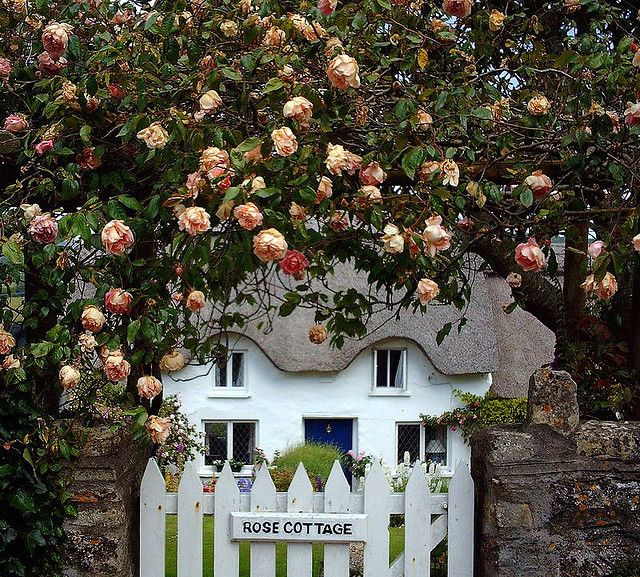
So a strategy that kept me safe as a child morphed into the most unsafe place on which to build my own dreams of being a writer. I had placed my home, my desire and dreams on an ever shifting trash heap of pain and unloveableness.  What is more, I willing kept abandoning work on my own house of dreams (usually when I just started laying the foundation) to put all my time and effort into building someone else’s.

So I recently moved my home onto safer ground with a clearer understanding of how to set boundaries in a loving way and to refocus my attention on myself.
dreamcottage

This process of reclaiming who I am at times can be both exhilarating and frightening but I am determined now that I have found a safe place to begin building my home, I will not budge.  And when old habits crop up and I am tempted to abandon my writing to give energy to someone else in an unhealthy way I will do as my favourite author suggests:

“And if you should someday, somehow get vaulted out of your home by either great failure or great success, then you job is to fight your way back to that home, the only way that it has ever been done, by putting your head down and performing with diligence and devotion and respect and reverence whatever the task is that love is calling forth from you next.”

Thank you Elizabeth.

Writing Space: Letting in the Light

I’ve never had a dedicated writing studio.  I write wherever I can find a little space and a little solitude.  But I do dream of one day having a writing space where creative magic is nurtured by the beauty of the space and it is decorated with a dash of childlike whimsy.

The place I’m currently renting is a basement apartment that I share with my sister and three very demanding cats. But I am lucky enough that my bedroom can accommodate my bedroom furniture and my small writing table.

It is an entry-level basement which means we are blessed with full-sized windows and my room has two that look out into the back garden and the mountains beyond. The only downside is that I write in the mornings and the windows face east. It was impossible to write with the blinds up as the sun was directly in my face. The simple solution would be to keep the metal blinds closed when I write, or it would be if I didn’t have three cats.

If you’ve ever owned even one cat you will understand the futility of trying to keep them out of any room they decide they want to hang out in and a closed door is a definite invitation to bat at it like a pugilist or as my one cat does, throw his whole body at it making it rattle in its frame.

It’s enough of a challenge to write while you have a cat walking across the keyboard (cats can be such critics of the written word) or draped over your forearms as one of them is doing now as I write this.  But my feline companions also think closed Venetians are the best cat toys in the world.

After spending several months pulling cats out of bent and twisted louvers or having to reinstall the blind because they pulled it off the window I resorted to taping up thick blotting paper on the panes while leaving the blinds pulled up.

That inexpensive solution did the trick, the sun was off my face and the cats ignored the windows.  But after two years, the tape I used to secure the paper had dried up and the paper has curled with age.

I wanted something a bit less utilitarian than paper and tinfoil screamed white trash, so I decided to install frosted privacy film on the windows. I was going to choose something simple, maybe with a bit of texture but when I went to the hardware store and looked at the choices, I did an unexpected thing.

Along with frosted textures and understated designs there were two patterns that I can only describe as faux stained glass. One featured magnolias, the other clematis and both bordered on the tacky end of the design esthetic. But there was something about them, their vibrant colours and as a gardener I can’t help but love flowers.  My first choice, the simple frosted white ones suddenly looked institutional.

I bought the stained glass flowered window film, one of each pattern. This choice shocked me and my sister too as she said “Really, that’s not what I thought you would have picked.”

But now that I’ve installed them I know why I made those choices and why they are perfect for my room. They may be fake stained glass but they transformed the space in which I write into a sacred space of creativity. The quality of light that now streams in, in the morning makes the room feel magical and a little bit whimsical.  In fact, a perfect place to write.

Window Collage

Your Relationship With Your House

I just finished writing a story where the house is as much a character as the people. It is a snug little cottage that at first, welcomes the new owner but below the surface it hides its own mystery and pain. As I wrote, I thought about the way houses have a personality, a feeling about them good or bad and I wondered how this comes about.

I believe that in some cases it’s because of spirits that still linger. I’ve had enough first-hand experience not to question the possibility of ghosts and things that go bump in the night. But what about places that have no spectral visitors but still elicit an emotional response from visitors. What is it we are feeling?

At the most basic level we are all energy. Thoughts and emotions are no different, just another form of energy. So if a home is filled with loving people, where the events were positive can these energies become imprinted into the very walls and floors? And would the reverse be true, if a building has witnessed trauma, violence and deep unhappiness would that too become part of the fabric of the building.

So what allows a dwelling to record the lives of its previous owners or the events that occurred there? If most building materials are porous and can absorb sound, is it just an accumulation of these sound waves that contribute to the overall feel of a home; much like a sponge absorbing water. Or could it be something more? What if it is more like a relationship that over time becomes an indelible bond between house and homeowner?

I recently read The Bond, Connecting Through The Space Between Us by Lynne McTaggart. In her book she explores the nature of bonds not just between human beings but between our environment, the natural world, our solar system and even the universe. It is a fascinating read and a book I highly recommend.

In discussing Heisenberg’s “quantum field theory” she states the following;

He discovered that at our most fundamental layer of being, our subatomic particles not only aren’t really a definable anything, but also do not remain the same at any moment. . . . All subatomic particles are constantly trading information with their environment and being reshuffled in a dynamic pattern. The universe contains and indeterminate number of vibrating packets of energy that constantly pass energy back and forth as if in an endless game of basketball with the quantum sea of light.

Further she writes:

Nature’s most basic ingredients are bundles of energy that are indistinguishable from the field around it. According to quantum field theory, the individual entity is transient and insubstantial, and particles cannot be separated from the empty space around them. Although you appear the same at any given moment, you are an entirely new batch of subatomic energy with every breath you take.

Rather than a batch of separate things jostling around in empty space, it is more correct to say that fundamental matter is simply a relationship between two indeterminate things: particle energy traded with other particle energy and also with the background Field. It is in fact the Bond between these tiny particles and the background Field that creates everything that we refer to as “matter.

She concludes her description of the relationship between energy and the Zero-Point field with the following:

What this essentially boils down to is that everything we label an object, no matter how large or how heavy, is essentially a collection of electric charges interacting with other energy. The most basic property of matter, its sense of being a solid “something,” is only and entirely due to the Bond between subatomic particles and the background sea of energy.” A subatomic “particle” is simply the seeking of a connection in the space between a big web of energy and a little knot of energy. You and everything around you are simply a collection of charged energy having a relationship.

I know that the above quotes deal with a purely scientific description of an energetic relationship but I’m a fiction writer so I’m allowed to make the next supposition if only as an exercise in creativity.

So if we are energy having a relationship with other energy and the Zero-point Field by constantly exchanging subatomic particles and our environment includes our home what if what was going on was that over time the energy that was once house is now you and vice versa. And in that back and forth relationship would the memories and emotions be part of that exchange?

And what about the house? Over time do we take on the history of the trees that the framing is constructed from, or the feeling of a mountain from which the stone was quarried. And what about the people who built the house, the land that it is situated on or the furniture inside it?

My mind fizzes with the possibilities.

What kind of relationship are you having with your home? Do you have a blissful union or do you require couples counselling? Or maybe it’s time to find a new house mate.

Something to ponder isn’t it?

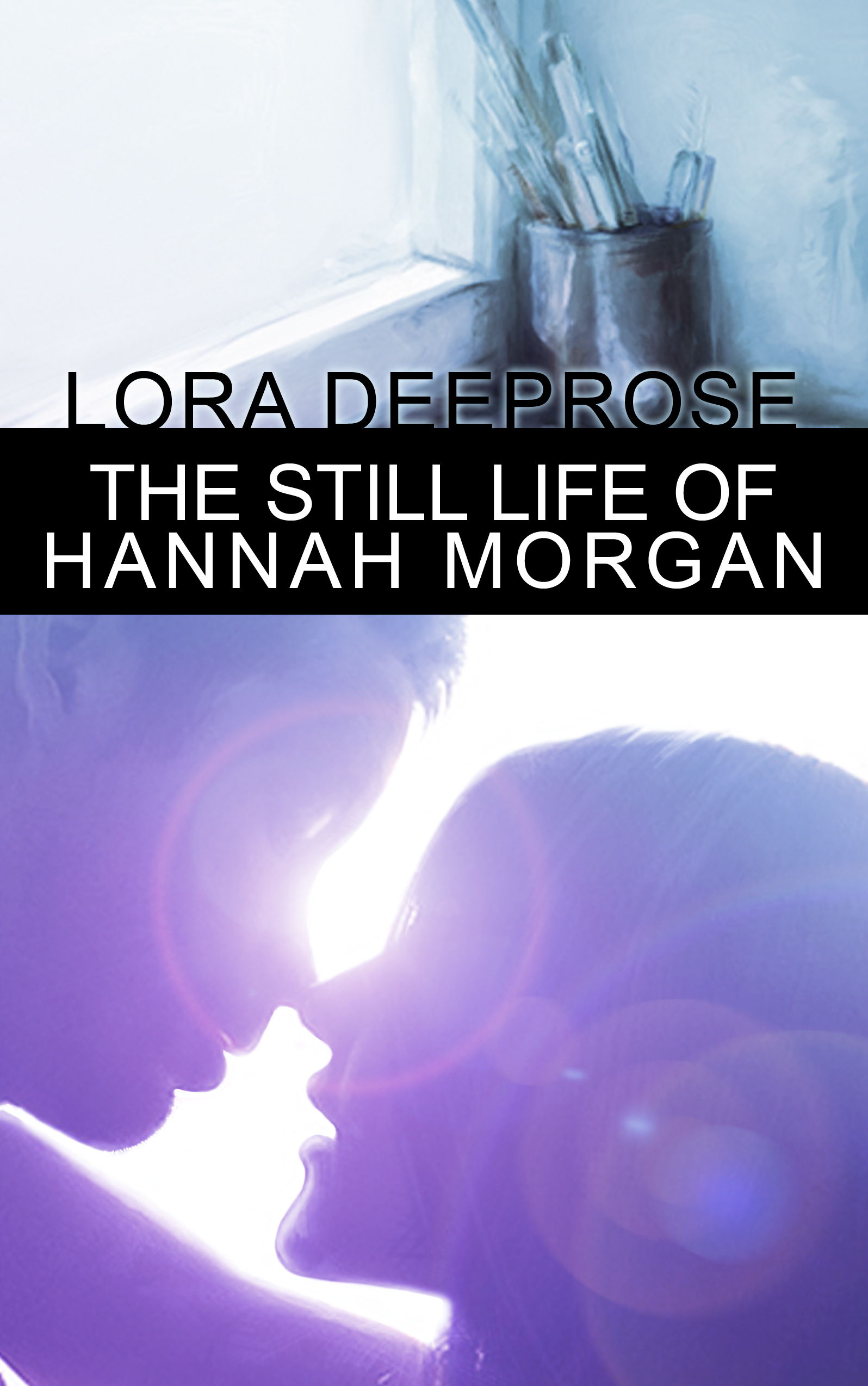
The Still Life of Hannah Morgan ebook sale

Now until November 29th save 75% on The Still Life of Hannah Morgan through Smashwords!
Use coupon code HE82H.

The Hand Written Word

JournalsI wrote my first novel  longhand in a plain coil scribbler and later transcribed it on my clunky PC that lived in the basement office. A decade later, even though I have a skookum laptop, I still use notebooks as part of my writing process. Invariably I have three notebooks on the go at any given time each with its own purpose.

One is for my personal journal. My writing routine includes a morning date with my journal to get out all the random things pinging around my brain. For me it is the most effective way of gearing up to focus on my current WIP. Three pages of personal writing clears the mental decks to allow the story full reign in my thoughts.

The second notebook I use for new story ideas that I don’t want to forget but don’t have time to explore, character sketches and blog post topics.

And the third scribbler I use for my current work when I come up against a plot problem or the characters’ motivation seems a little murky. I simply write down questions and answers with no attachment to whether the answers fit the problem. And more often than not, I come up with the solution, or find where I am pushing a character to do something they wouldn’t do.

Cursive writing; connecting my thoughts through my hand to the page creates a magick allowing possibilities to emerge that I wouldn’t have found stabbing away at my keyboard.

Recently there has been debate in both the US and Canada whether to scrap cursive writing instruction in schools. Proponents believe this mode of communication is no longer relevant in an age of texting and keyboarding. Arguments for the other side reveal that cursive writing is more than just a means of putting words on paper.

A recent article by William Klemm, D.V.M., Ph. D, professor of Neuroscience at Texas A&M University for Psychology Today addresses the importance of cursive writing and its positive effects on brain function.

In the case of learning cursive writing, the brain develops functional specialization that integrates both sensation, movement control, and thinking. Brain imaging studies reveal that multiple areas of brain become co-activated during learning of cursive writing of pseudo-letters, as opposed to typing or just visual practice.

Other research highlights the hand’s unique relationship with the brain when it comes to composing thoughts and ideas. Virginia Berninger, a professor at the University of Washington, reported her study of children in grades two, four and six that revealed they wrote more words, faster, and expressed more ideas when writing essays by hand versus with a keyboard.[4]

There is a whole field of research known as “haptics,” which includes the interactions of touch, hand movements, and brain function.[5] Cursive writing helps train the brain to integrate visual, and tactile information, and fine motor dexterity.

So what I felt intuitively about the power of hand writing to unlock ideas and engage the whole brain to a problem and its solutions seems to be backed by science.

Is cursive writing an archaic method of communication whose time has past or is it a necessary link to developing all our mental capacities?

Will the next generation of writers who haven’t been taught the most basic skill of hand-wrought words be able to generate ideas and feelings in the same degree as past generation of the pen enabled?

In the future will novels be written in an abbreviated language of texting and twitter posts and if so will they be able to convey deep emotions and complex ideas? Is eliminating cursive writing just the next step in our evolution as a species? Or will something of our humanity be lost without it?

Author’s Note: The day after I finished this post I came across Andrew Fitzgerald’s TED Talks entitled Adventures in Twitter Fiction. The talk is fascinating on its own as he explains how some authors are exploring new ways of storytelling using Twitter as the medium but what caught my eye was when he spoke of  Jennifer Egan’s Black Box which was published  as a serialization on twitter by The New Yorker. It took her a year to condense the story down to the 140 characters that Twitter allows. And how did she write the first draft before it was posted online? She wrote in a notebook using longhand.

Ebook Giveaway: The Still Life of Hannah Morgan

My contemporary romance, The Still Life of Hannah Morgan, is now available as an ebook edition. To celebrate the release I’m giving away five copies of the ebook.

Along with the romantic elements of the story, my novel explores creative passion and what it takes to make that passion a reality especially when those around you say it’s not possible. In keeping with this theme, I’d love to hear what your passion is whether it is baking the perfect cake, writing a novel, growing flowers, painting, cooking a nourishing meal, decorating your home or knitting a sweater.

To enter the ebook giveaway simply tell me what your passion is in the comments section of this blog along with your email address {janesmith(at)gmail(dot)com} so that I can send the winners the link and download code. Winners will be selected at random using random.org. The giveaway closes midnight PT Monday September 22, 2013. I look forward to reading your comments.

The Still Life of Hannah Morgan

Blurb

“The longer you choose to play it safe, the more miserable your life will become.  The universe rewards risk my dear; you know what you need to do.”

Hannah Morgan’s life is at a standstill.  Her dreams of becoming an artist vanished with the sudden death of her grandmother and mentor.  To appease her distant and disapproving mother, Hannah gets a respectable job at a high-end day spa.

Instead of painting masterpieces, Hannah spends her days painting nails and giving facials to wealthy women.  Her dreams for the future have become a hideous nightmare.  And, it just keeps getting worse.  She catches her boyfriend cheating, loses her job and has to watch from the sidelines as her best friend Jasmine Blue goes after her own dreams of owning her own salon.

When she meets Aaron, a working artist, Hannah finds a kindred spirit.  And, to her surprise, she finds the courage to follow her dreams.

When circumstances beyond her control threaten to destroy both her relationship with Aaron and her dreams of a bright future, Hannah fears her mother was right; that some dreams aren’t meant to come true.

Contest is open from September 08 to September 22, 2013.


Congratulations Barb for winning a free ebook of The Still Life of Hannah Morgan.

The Perfect Writer’s Chair

The other day, I dropped in to Masterpiece Pools and Spa to get my hot tub water  tested when I spotted  something in the store’s backroom that made me stop in my tracks. It was a solid oak swivel chair. It looked completely out-of-place amidst the pool hoses and hot tub accessories. I let out a sigh of longing catching Al, the owner’s, attention.

I asked him where he got the chair. He said it was his father’s from when he was promoted to an office job for BC tel in 1958. The chair dates from the same year as it’s marked on the bottom of the seat. The solid oak chair and its companion desk were  brand new office furniture for a man’s new position and office. Al’s dad used that chair until a few decades later when the company was updating all the office furniture; out with the solid wood, handcrafted furniture in with the new prefab grey metal desks and fabric covered chairs.

When the company was getting rid of the old furniture they asked the employees if the wanted to take any of it home because if they didn’t it was all going in the trash. So Al’s dad rescued the desk and chair, so at least a few pieces of history and a testament to craftsmanship were saved.

Like all  writers I spend a great deal of time with my butt parked in a chair for hours at a time and the right type of chair is essential. It’s like the story of Goldilocks and the Three Bears; the perfect chair should be neither too hard nor too soft but just right.

Chair03

This vintage chair is not too ergonomically correct; not so soft that you can write for too long without getting up to stretch and get the blood flowing. It’s not too hard like the cast-off kitchen chair I’m currently using which is so uncomfortable I have to force myself to use it.  It is just right; solid and substantial. It has a weightiness that keeps one grounded in front of the desk. The swivel mechanism  allows you to tilt back ever so slightly which is the perfect position when your mind needs to wander and explore plot twists and character motives. One day perhaps I’ll buy one myself but for now the old kitchen chair will have to do.